
Launch of External Examiner Program to Enhance Academic Quality
In line with Anbar University's efforts to develop the quality of higher education and elevate academic programs to international standards, the College of Computer Science and Information Technology launched an external examiner program for undergraduate programs in the Departments of Computer Science and Computer Network Systems, in accordance with the directives of the Ministry of Higher Education and Scientific Research.
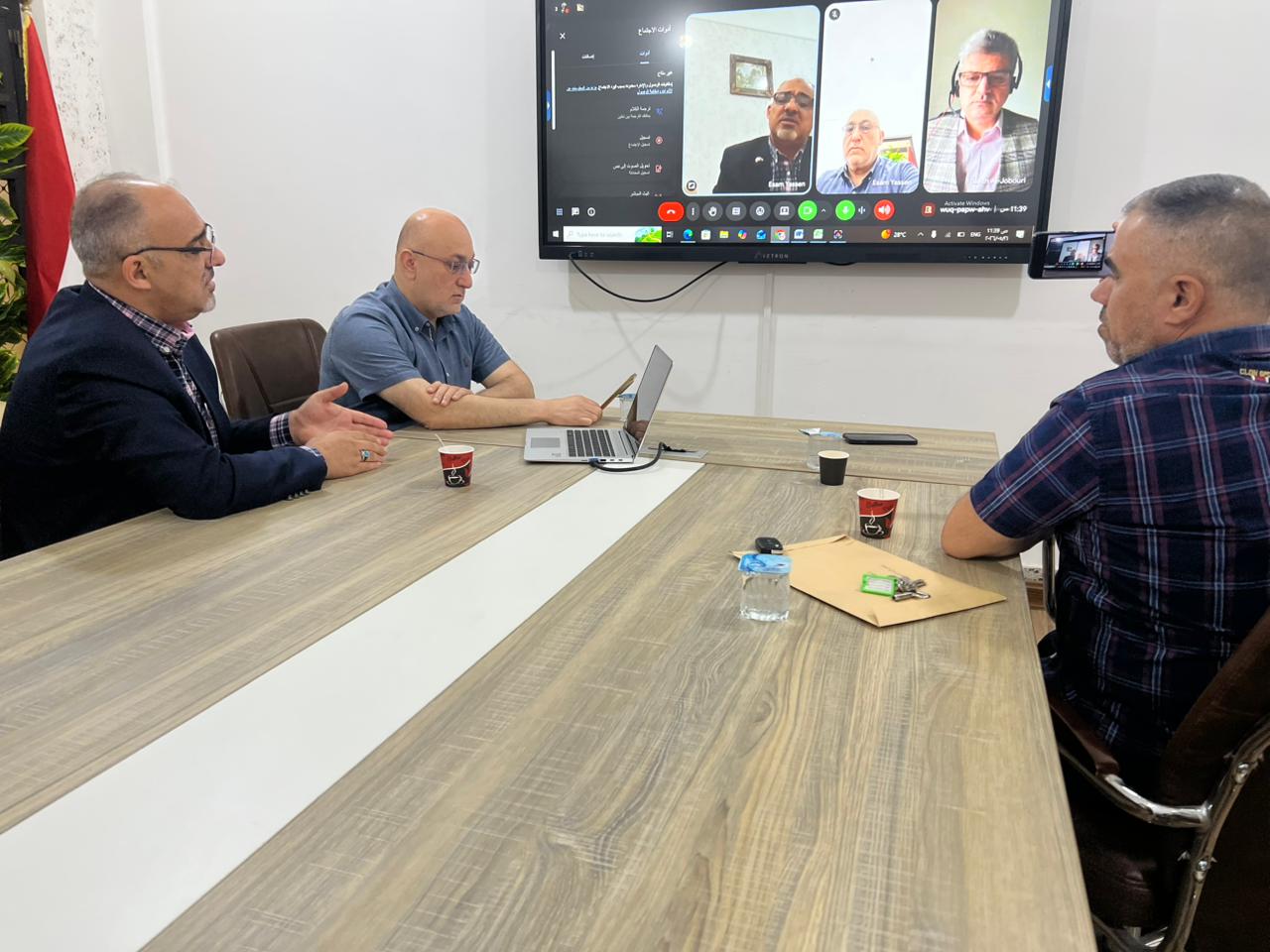
The college hosted, via an online meeting, Assistant Professor Dr. Laith Abdullah Mohammed, a faculty member at Abertay University in the UK, as an external examiner appointed by the university administration. His role was to review the accredited study programs and student file management mechanisms from admission to graduation, as well as to observe the academic procedures adopted by the college.
The external examiner was received by the Dean of the College, Professor Dr. Salah Awad Salman, in the presence of the Assistant Dean for Scientific Affairs, the heads of the academic departments, and the head of the Quality Assurance and Academic Accreditation Unit. A consultative meeting was held to review the mechanisms for managing undergraduate programs, introduce the academic departments and their accredited curricula, and discuss the objectives and learning outcomes of the educational programs and their alignment with quality and academic accreditation requirements. For his part, Dr. Laith Abdullah Mohammed expressed his gratitude to the university president and the college dean for their kind invitation, praising the scientific and academic steps the university is taking to strengthen the educational process and enhance the academic environment. He emphasized that these efforts align with best practices at reputable international universities.
The launch of the External Examiner Program comes within the framework of the college deanship's commitment to expanding scientific and academic cooperation with international universities and exchanging expertise in a way that contributes to developing study programs and improving the quality of educational outcomes to keep pace with modern scientific advancements.
Media and Government Communication Division